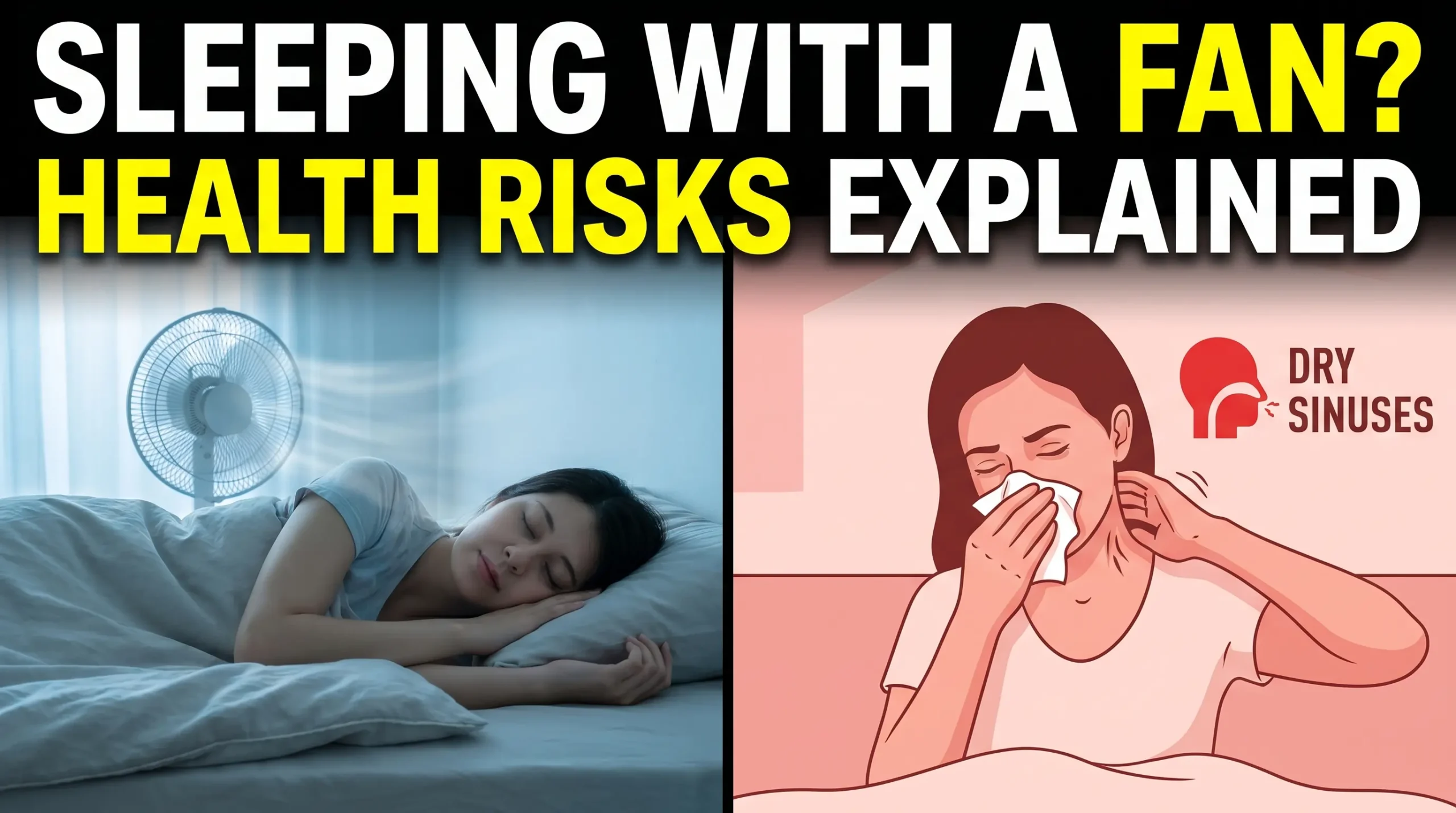
Sleeping with a fan is generally safe for most healthy adults, providing cost-effective cooling and soothing white noise. However, for those with allergies, asthma, or sensitive skin, constant airflow can exacerbate symptoms by circulating dust, pollen, and pet dander while drying out mucous membranes and skin.
Contents
The Science of Airflow: How a Fan Affects Your Body
While a fan doesn’t technically “cool” a room (it simply moves air to facilitate evaporative cooling on your skin), the physiological impact of that movement is significant. As a Senior Health Editor, I’ve analyzed the data: here is how that breeze affects your systems overnight.
1. Respiratory Impact and “Dry Sinuses”
The primary drawback of sleeping with a fan on is the dehumidifying effect on your body. Constant airflow accelerates the evaporation of moisture from your mouth, nose, and throat.
- The Rebound Effect: When your nasal passages become too dry, your body may overcompensate by producing excess mucus. This leads to waking up with a “stuffy” nose, a scratchy throat, or even a sinus headache despite not being sick.
- The Asthma Factor: For those with hyper-reactive airways, cold, dry air can be a trigger for nocturnal asthma symptoms.
2. The “Dust Delivery System” Problem
Fans don’t just move air; they move everything in the air. If your ceiling fan blades have a layer of dust, turning it on creates a concentrated vortex of allergens.
- Allergen Redistribution: Fans circulate pollen, dust mites, and pet dander that have settled on carpets or bedding.
- Eye Irritation: If you sleep with your eyes slightly open (nocturnal lagophthalmos), the airflow can cause severe dryness and redness by morning.
3. Muscular Stiffness and Torticollis
Have you ever woken up with a “kink” in your neck after a night with the fan on high? This isn’t a coincidence.
- Muscle Contraction: Concentrated cold air blowing directly on a specific muscle group—like the neck or shoulders—can cause those muscles to tense or cramp.
- Torticollis: In extreme cases, this localized cooling can lead to torticollis (a twisted neck), where the muscle stiffness makes it difficult or painful to turn your head.
4. Cardiac Strain: The Humidity Paradox
Recent physiological research has introduced a nuanced view of fan use for older adults.
- Hot/Humid Environments: Fans are highly effective at aiding sweat evaporation and reducing core temperature.
- Hot/Dry Environments: When temperatures exceed 35°C (95°F) in very dry heat, a fan may actually increase heat gain by blowing air that is hotter than your body temperature across your skin, potentially increasing cardiac strain as the heart works harder to pump blood to the skin for cooling.
Best Alternatives to Fans for Better Sleep
If the side effects of a traditional fan outweigh the benefits, modern sleep technology offers sophisticated fan alternatives for cooling that prioritize respiratory health and temperature regulation.
High-Tech Cooling Systems
| Device Type | Featured Model | Why It Works |
|---|---|---|
| Cooling Mattress Pad | Chilipad or Eight Sleep | Uses water-cooled tubes to regulate bed temperature without moving dry air over your face. |
| Active Airflow System | BedJet 3 | Blows filtered air under your sheets, providing the cooling sensation without the sinus-drying “fan face” effect. |
| Smart Tower Fan | Dreo or Dyson | Features “Sleep Modes” that gradually reduce intensity and use specialized blade geometry to minimize noise and turbulence. |
Hybrid Solutions (Health-First)
If you love the breeze but hate the allergies, look for hardware that multitasks:
- HEPA Air Purifier Combos: Units like the Dyson Purifier Cool or Philips 2000i act as fans but pass the air through a High-Efficiency Particulate Air (HEPA) filter first, removing 99.97% of the dust a normal fan would just blow around.
- Evaporative Coolers (Swamp Coolers): Better for dry climates, these add moisture to the air while cooling, preventing dry sinuses from a fan.
Low-Tech & Lifestyle Adjustments
- Natural Fibers: Swap polyester or high-thread-count cotton for linen or Tencel sheets. These materials have superior moisture-wicking properties and “breathe” better.
- The “Ice Bowl” Trick: Place a large bowl of ice in front of an oscillating fan. This cools the air temperature slightly through evaporation rather than just moving warm air.
- Blackout Curtains: Thermal-lined curtains prevent the “greenhouse effect” in your bedroom during the day, reducing the need for heavy cooling at night.
Expert Tips for Using a Fan Safely
You don’t necessarily have to ditch the fan if you follow these “best practice” guidelines to mitigate health risks:
- The “Wall Bounce” Method: Instead of pointing the fan directly at your bed, point it toward an opposite wall. This circulates the air in the room without creating a direct, drying stream on your face.
- Use a Timer: Set your fan to turn off two to three hours after you fall asleep. By then, your core body temperature has naturally dropped, and the ambient room temperature is usually lower.
- Prioritize Oscillation: Never let a fan stay fixed on your head or neck. Use the oscillation setting to ensure air moves throughout the room.
- Clean the Blades Weekly: This is non-negotiable for allergy sufferers. Use a damp microfiber cloth to remove dust from blades to prevent it from becoming airborne.
- Distance Matters: Keep the fan at least 3 to 5 feet away from your bed to reduce the intensity of the drying effect.
Final Verdict: Should You Use a Fan?
For most people, the white noise for sleep and the gentle cooling of a fan are essential for a good night’s rest. If you wake up feeling refreshed, there is no medical reason to stop.However, if you consistently wake up with a dry mouth, congested sinuses, or stiff muscles, it’s time to transition to a HEPA air purifier or a cooling mattress pad. Your sleep environment should support your health, not hinder it.